Call : +353872481092 Mail : greystonesfootcareclinic@gmail.com Address : 6a The Cottages, Main Street, Kilcoole,
A63 HX46
The Diabetic Foot
I offer standard foot care and maintenance to people with Diabetes. On the initial appointment, a neurovascular assessment will be performed and repeated at 3, 6 or 12 monthly intervals, depending on the risk presented.
How does Diabetes affect your feet?
Feet are one of the most vulnerable parts of the body, yet most people tend to neglect them. For the majority, this is not too serious but for the diabetic, it can have dire consequences.
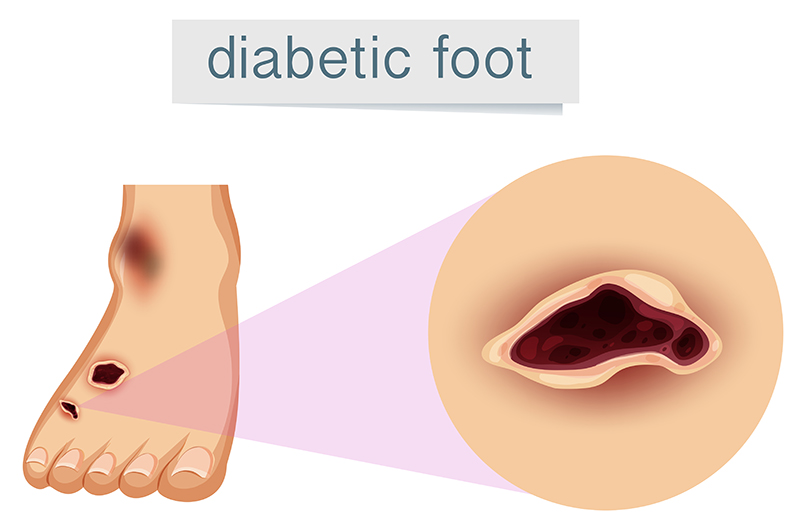
Neuropathy can result from poor blood glucose control and damage to the nerves in your feet. This causes a loss of protective sensation, meaning your feet may be unable to detect injury. For example you may not be aware of an ulcer on the bottom of your foot as you do not feel any pain. This can then lead to more serious foot complications like infection or even amputation if not treated. Symptoms of neuropathy can include numbness, tingling, pins and needles or a burning sensation in the feet.
Poor blood glucose control may also cause a reduction in the blood supply to the feet. Poor circulation delays healing and makes people with diabetes more susceptible to infection following any cut or wound to the foot. Symptoms of poor blood supply may include cold feet, cramps and pain.
Diabetics who have nerve damage, poor circulation, and neglect their feet are at high risk of developing more serious foot problems like ulcers, infections and even amputation.
How often should you see a foot health professional if you have diabetes?
People who suffer from diabetes should see a foot professional as soon as they are diagnosed. An initial diabetes foot check and neurovascular assessment will help determine how often you should visit a professional for diabetic foot care and prevention of diabetic foot problems.